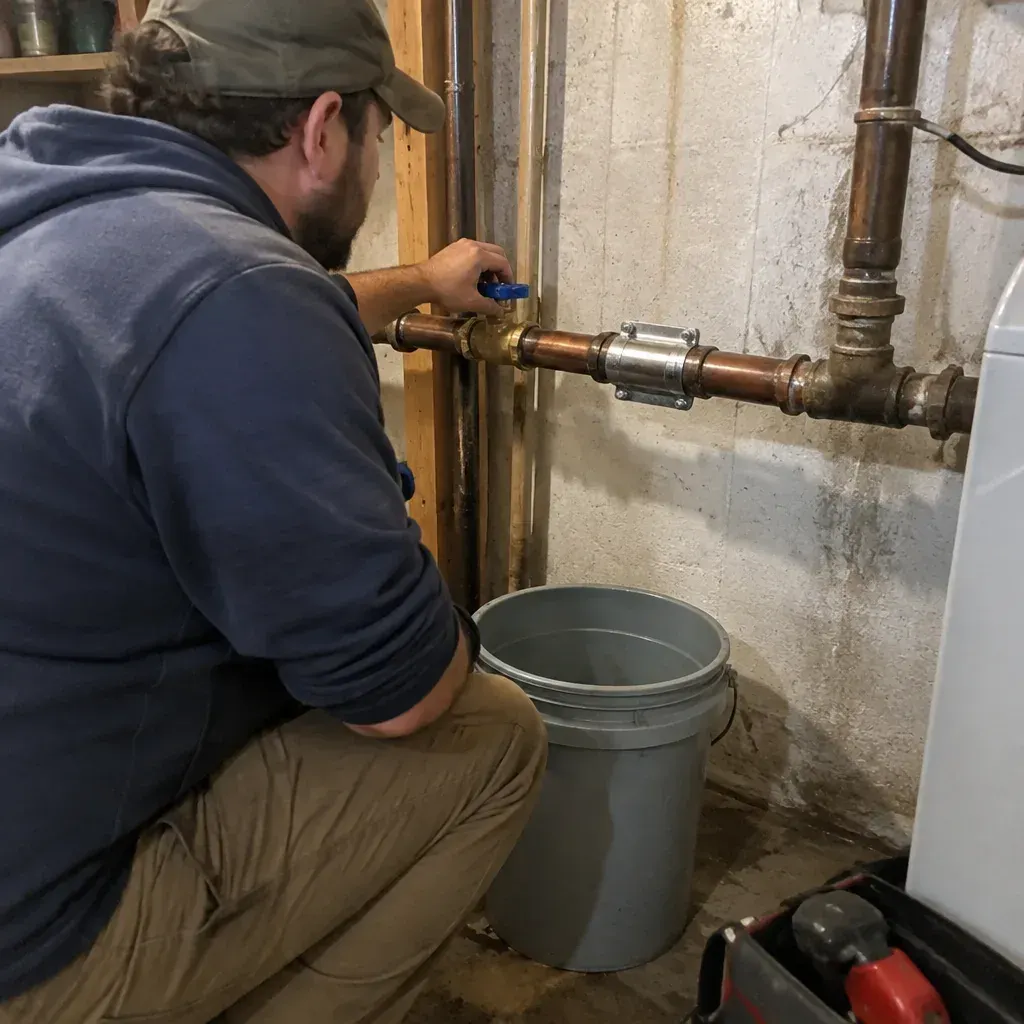
West Jordan Pipe Repair Clamp Guide
A clamp can seal some accessible pipe breaks; fit, damage, and the maker’s limits determine whether it can hold or only buy time.
A repair clamp can seal some localized breaks on accessible pipe if its gasket fits the pipe and fully spans the damage within the product’s rated conditions. Treat it as temporary when the damaged section still needs a lasting repair or leakage continues.
How a Clamp Seals a Pipe Break
Start with the break’s shape and the clamp’s sealing area. A burst pipe repair clamp uses a band or housing with a gasket pressed against the pipe; fasteners hold that pressure in place. If the seal does not extend past the damaged area or sit evenly, water can keep escaping at the edges. A compact opening on an accessible, round section may suit a clamp, while a long split or distorted pipe can leave too much damage uncovered.
Next, compare the pipe itself with the clamp’s stated fit. The outside diameter must let the clamp sit squarely, and the gasket must suit the pipe material; a band that seems to wrap around can still seal poorly. In a West Jordan house or a small commercial property, the visible line may be copper, PEX, CPVC, or another material. The product instructions determine whether that particular water pipe clamp is intended for the material and installation conditions.
A clamp choice cannot be made from a place name or building type. Whether you are considering visible water pipe repair in West Jordan or looking toward local reference points such as Bingham Junction Station, Main Street, and Centennial Park, the relevant details remain the pipe and the break. Look for the product’s permitted diameter range, compatible materials, pressure rating, and damage limits before selecting it. Those specifications help distinguish a plausible temporary seal from a mismatch.
Match Clamp Fit and Damage Limits
Check the pipe’s measured outside diameter against the manufacturer’s range, then verify material compatibility. Diameter matters because a clamp that sits crooked or leaves gaps may not compress the gasket evenly. Material matters because a seal designed for one surface or pipe system may not work as intended on another. For a West Jordan property, the installed line—not assumptions about local homes—sets the fit. If the label does not clearly cover the pipe, do not treat the clamp as a dependable match.
Then compare the pressure rating with the conditions listed for the water line. A clamp can fit the pipe and still fall outside its rated use, so appearance alone says little about whether it can hold. Read the full installation instructions for limits on placement, tightening, and the kind of opening it may cover. If the product excludes the pipe’s pressure or damage type, continued leakage is possible. The specification sheet is the useful check before choosing a clamp.
Inspect the sealing surface’s path across the damage. A small, localized opening may fit beneath the gasket, but a split that runs beyond it, a break beside a fitting, or an uneven section can prevent full contact. A West Jordan homeowner comparing a clamp for a house line should account for the whole damaged area, not just the wettest point. The same applies to a small business line: if the seal cannot sit flat around the pipe, another repair approach may be needed.
When a Clamp Buys Only Time
Consider cost by comparing what each option must cover. A compatible clamp may preserve sound pipe around a contained opening, while cutting out the damaged section requires replacement pipe and matching connections. Access also affects the amount of work: exposed pipe is easier to reach than a line concealed behind a wall, ceiling, or floor. In West Jordan, the useful comparison is specific to the break and access—not a fixed assumption about what a clamp or replacement will cost.
A clamp is less likely to be a sensible choice when the damage extends beyond its sealing area or reaches a joint, because the gasket may not isolate the leak. If water continues to escape after a clamp is fitted, leaving it in place can allow further water damage and postpone a lasting repair. For a house or small commercial property in West Jordan, compare the cost of access and a compatible replacement section with the risk of relying on a seal that does not hold.
Weighing a Clamp Against Replacement
Treat the clamp as temporary when it only limits leakage while the damaged section still needs a compatible, lasting repair. A stopped drip does not show that the pipe is sound beyond the gasket, or that the clamp is approved for continued service under the line’s conditions. In West Jordan, the next decision is whether the section can remain with an approved repair or should be cut out and replaced. The manufacturer’s instructions and the condition of the covered area matter to that choice.
If replacement is needed, the new section and its connections must suit the existing pipe system. A clean pipe surface helps the gasket sit evenly against the break. That comparison helps keep the decision focused: a clamp can be a limited measure on a suitable exposed break, while a replacement addresses damage the clamp cannot seal. For visible water pipe repair in West Jordan, continued seepage, a split beyond the gasket, or damage at a connection points away from relying on the clamp.
Check Before Choosing a Clamp
- Match the clamp’s stated pipe material and outside diameter to the exposed line before judging whether its fit is suitable.
- Check the pressure rating, damage limits, and installation instructions; a snug wrap does not prove the product is approved for the line.
- If the break exceeds the gasket, reaches a connection, or keeps leaking, compare a damaged-section replacement with continued reliance on the clamp.
- Confirm the clamp’s stated diameter range matches the pipe; a shell that sits unevenly can keep its sealing surface from pressing evenly over the leak.
- Look for limits on split length, width, and position. Damage that extends beyond the gasket’s coverage may leave water a path around the clamp.
- Check whether the installation instructions allow the available clearance and working conditions; a clamp that cannot be seated as directed may not hold under pressure.
Your Questions
Can a clamp stop a split in a pressurized water pipe?
Yes, in some cases. A clamp can seal a localized opening on accessible pipe when its gasket fully bears on the damaged area and the product suits the pipe material, diameter, pressure, and break type. A tight seal does not restore strength to pipe that is brittle or badly worn. Check the manufacturer’s limits against the actual pipe before relying on a clamp in a West Jordan property.
How can I tell if a pipe repair clamp is temporary?
It is temporary when it limits the leak but the damaged pipe still needs a lasting repair, or when the product instructions do not approve continued use in those conditions. A clamp cannot restore pipe beyond the area it seals. If leakage persists or the break reaches a joint, replacement of the damaged section may be needed. A dry surface by itself does not establish that the pipe has a lasting repair.
When might replacing a burst pipe section cost less over time?
Replacing the damaged section may cost less over time when a clamp would only hold briefly, the split extends beyond its sealing surface, or the surrounding pipe cannot support a dependable seal. Repeat leak checks and follow-up repairs add work, while cutting out the failed portion may resolve the damaged area in one repair. In West Jordan, the pros we connect you with can weigh that scope against a clamp selected for the pipe’s material, outside diameter, pressure rating, and damage.
Compare the Clamp With Replacement
Tell the pros we connect you with the pipe material, measured diameter, leak location, and clamp details to discuss whether section replacement makes more sense.
Call (801) 417-8013